Product Recording
Chart of Accounts and Journal Entry were the first real step toward making
Vyapar usable for Chartered Accountants. The design challenge had a hard constraint:
make complex accounting workflows cleaner without making CAs relearn them.
CA-led
Work moved Vyapar's credibility
in accountant-led product conversations and demos
10K+
Directional path led to TaxOne by Vyapar
Suvit acquisition serving 10,000+ CA firms
Why this existed
COA and JE weren't features. They were the entry point
into a much larger accounting journey.
Vyapar already helped businesses with billing. But for Chartered Accountants to trust the product,
the first two steps of the accounting chain had to work correctly and feel professional.
Without that, nothing downstream - Trial Balance, Financial Statements, Tax Filing - was credible.
Correct first, then usable, that was the non-negotiable order. A clean JE that let users enter incorrect accounting logic
would be worse than Tally. Getting the domain right with the PM before any screen design was essential.
RESEARCH
Accounting was new to me.
I had to learn the domain before I could design for it.
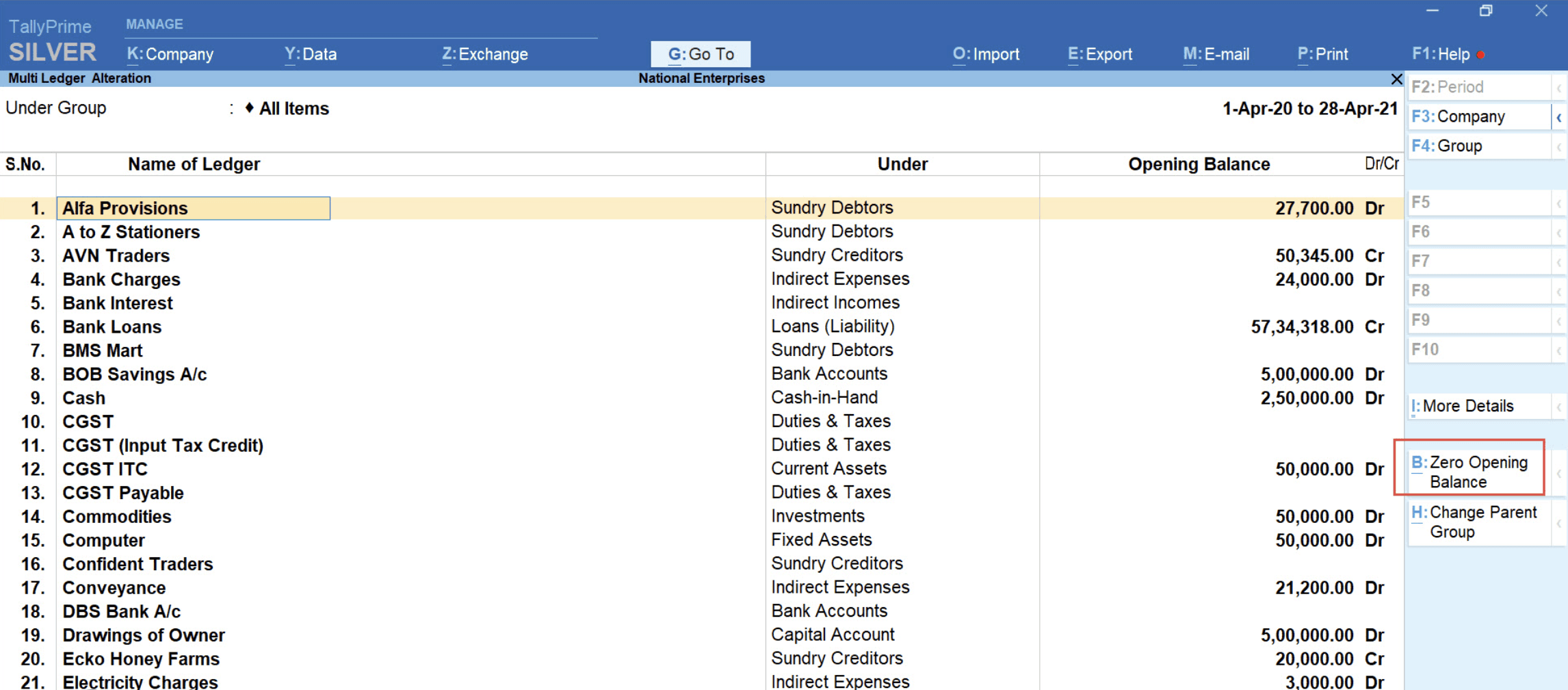
Before touching a frame, I worked closely with the PM to understand what COA and JE actually do,
why CAs create them, how logic changes per account type,
and what keyboard-driven behavior looks like in a JE workflow.
Not something I could infer from outside, it had to be understood from inside.
The goal was not to reinvent accounting.
It was to remove friction from it.
The insight that changed the JE design direction
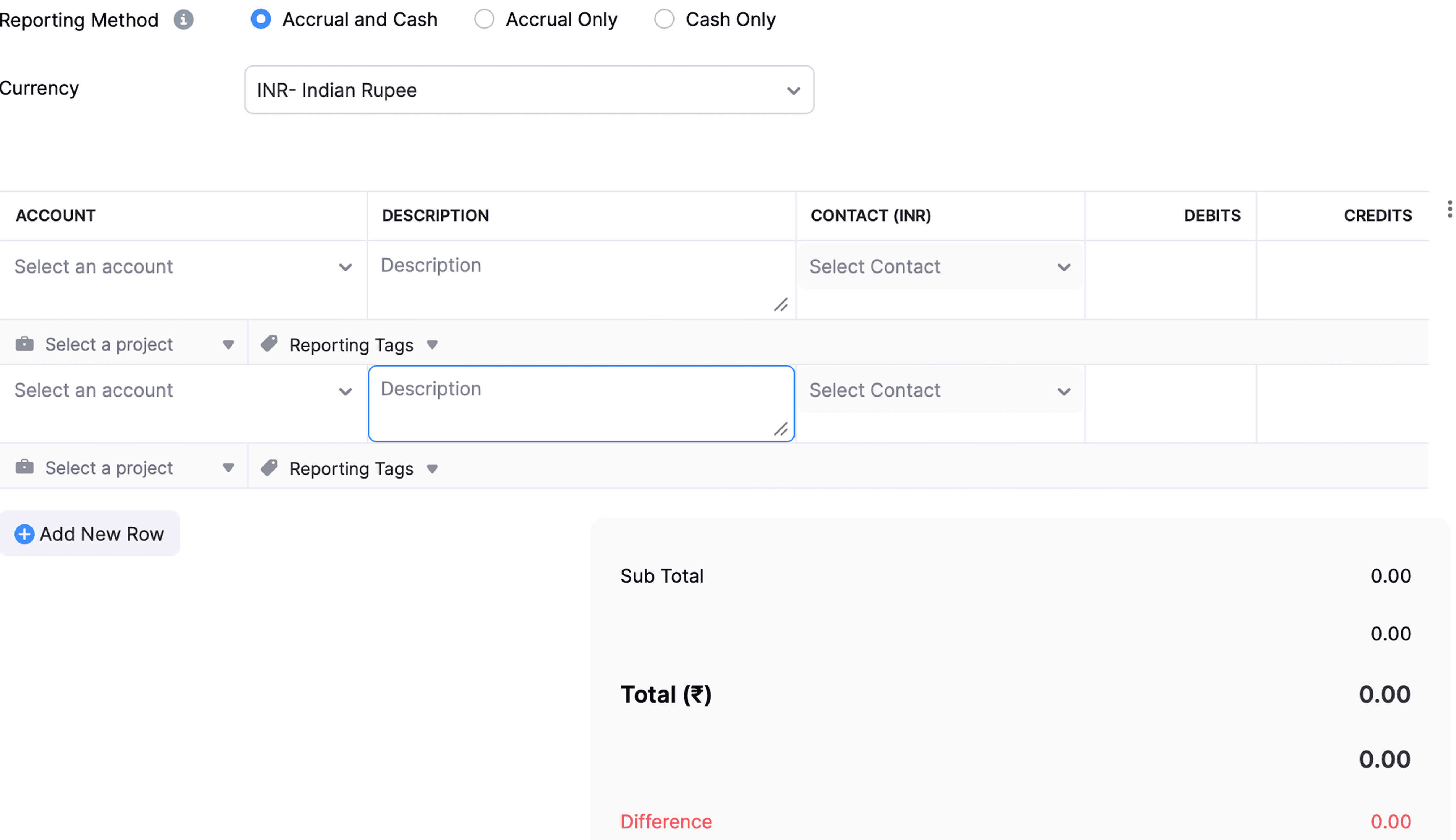
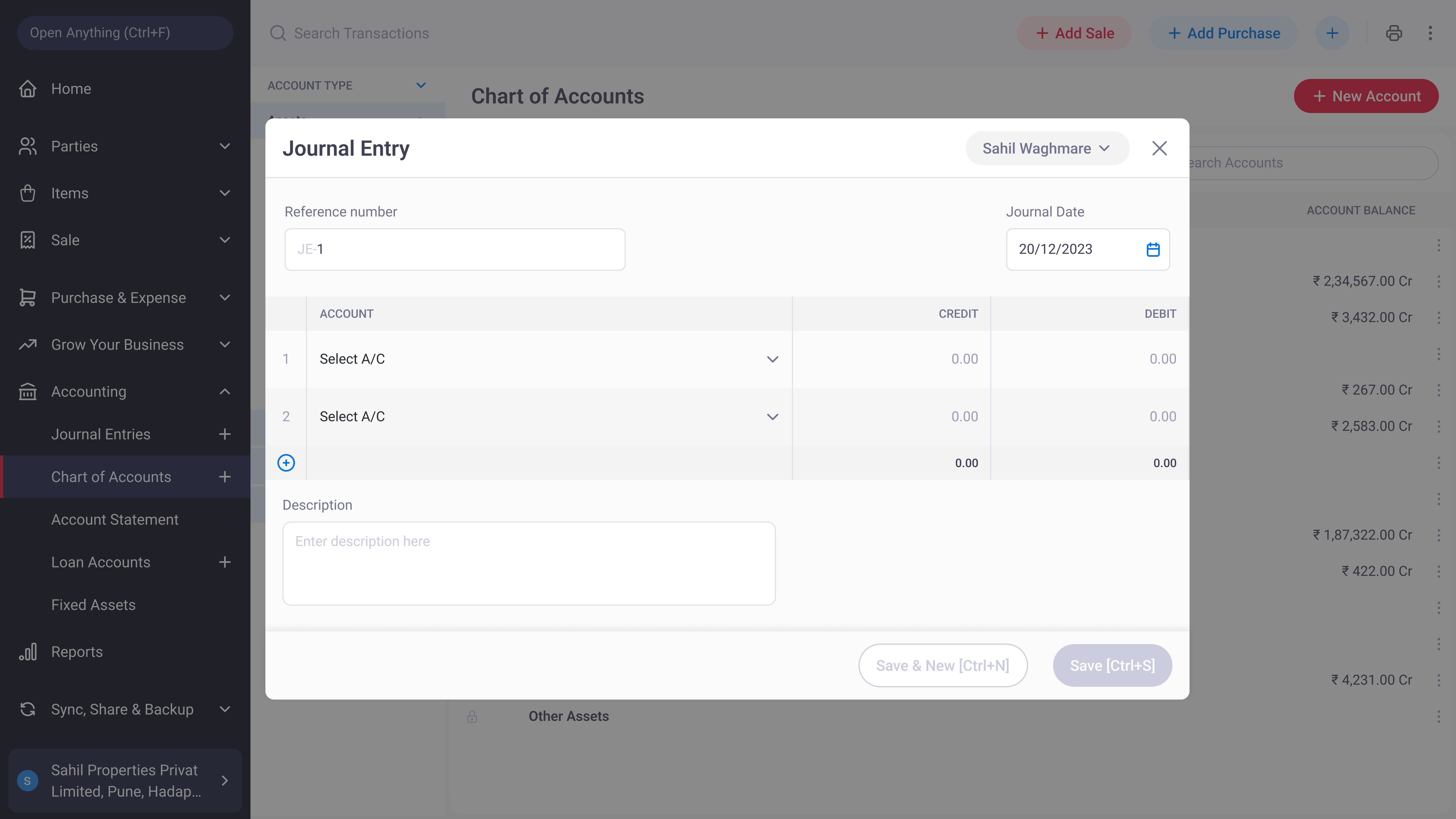
CAs create journal entries mostly using the keyboard. That single behavioral fact changed everything. I wasn't designing a form, I was designing a workflow for expert users who need to move fast with zero interruption. Every interaction decision flowed from that.
COA — the hardest structural problem
How do you show a complex account hierarchy
without making it feel heavy?
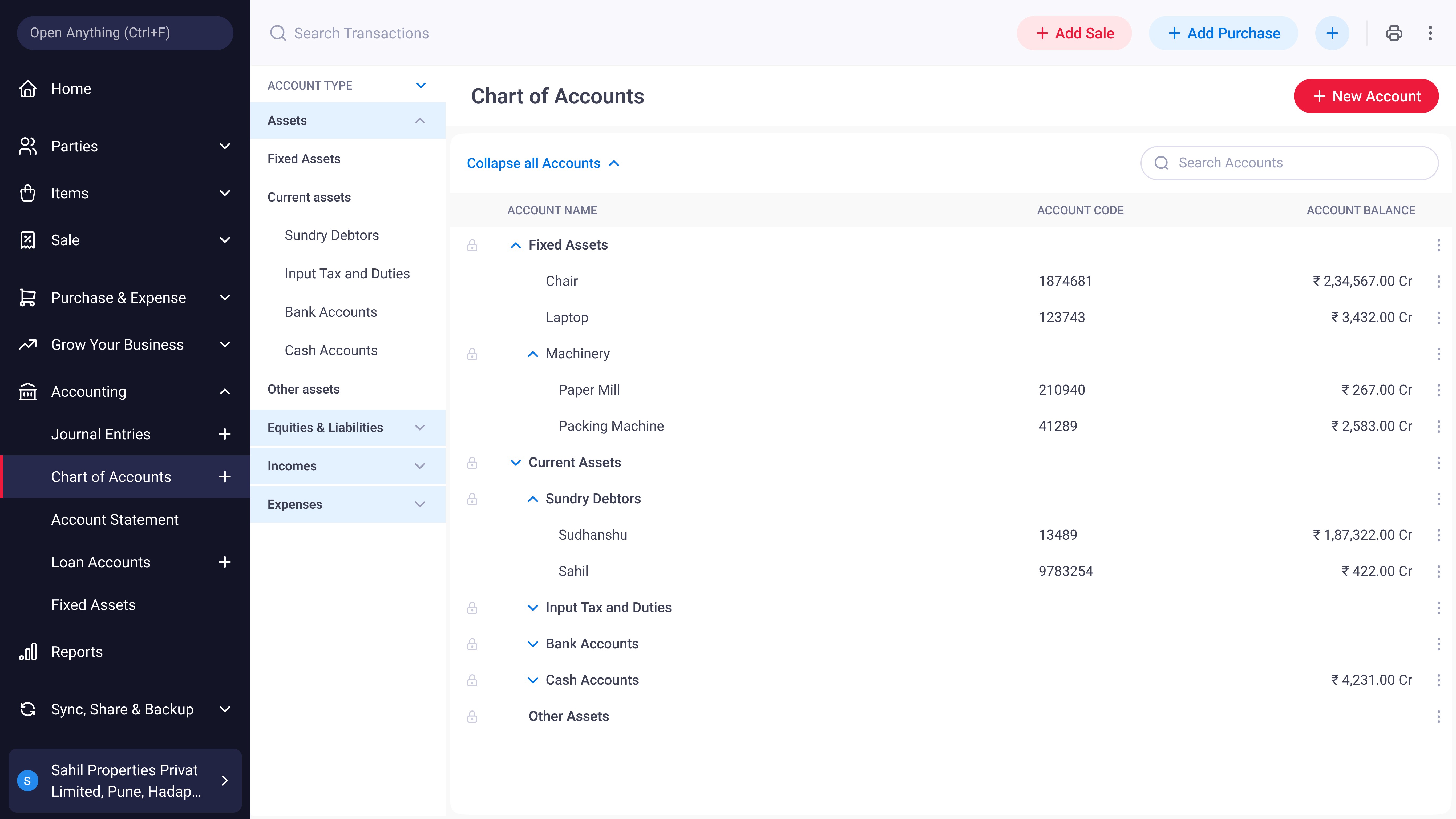
The COA listing had to show system-defined accounts, parent accounts, sub-accounts,
long hierarchies, and deep structures all at once. A flat list collapsed immediately.
Three structural decisions resolved it.
# 1
Side navigation
Introduced side nav to move between account groups, parent accounts, and sections. Solved hierarchy navigation and reduced cognitive load in one structural decision — less scrolling, clearer access.
# 2
Deliberate information hiding
Didn't repeat account type or parent name when already visible from the hierarchy. Removed document-related fields confirmed by CAs as rarely used. Lighter form, same real utility.
# 3
Visual weight calibration
System, parent, and sub-accounts needed distinct visual treatment. Too subtle: unreadable structure. Too bold: noisy screen. Multiple rounds of type scale, spacing, and indentation to find the right balance.
Journal Entry — speed and flow for expert users
Four decisions that made JE feel built for
how accountants actually work.
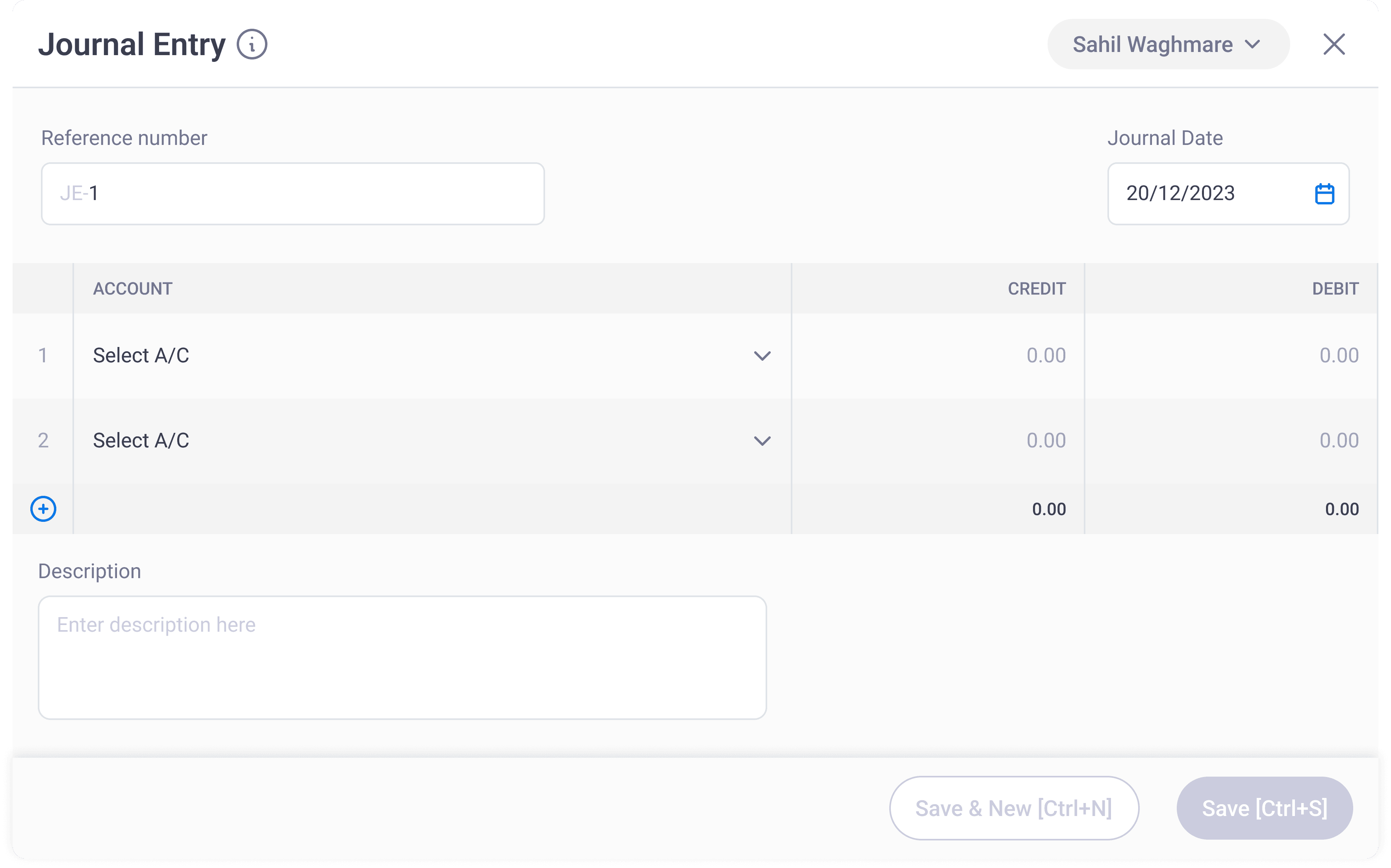
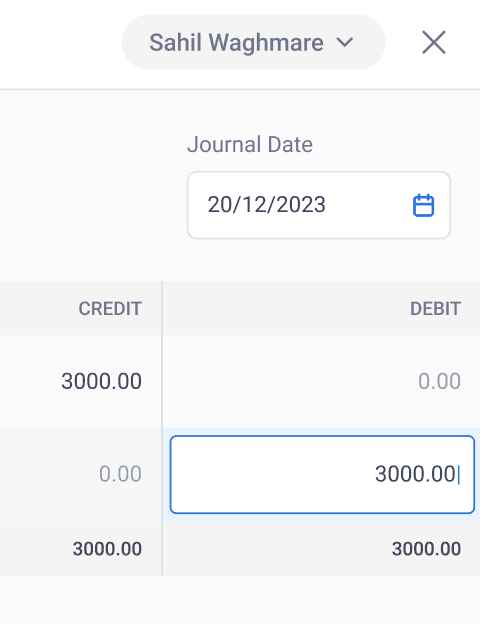

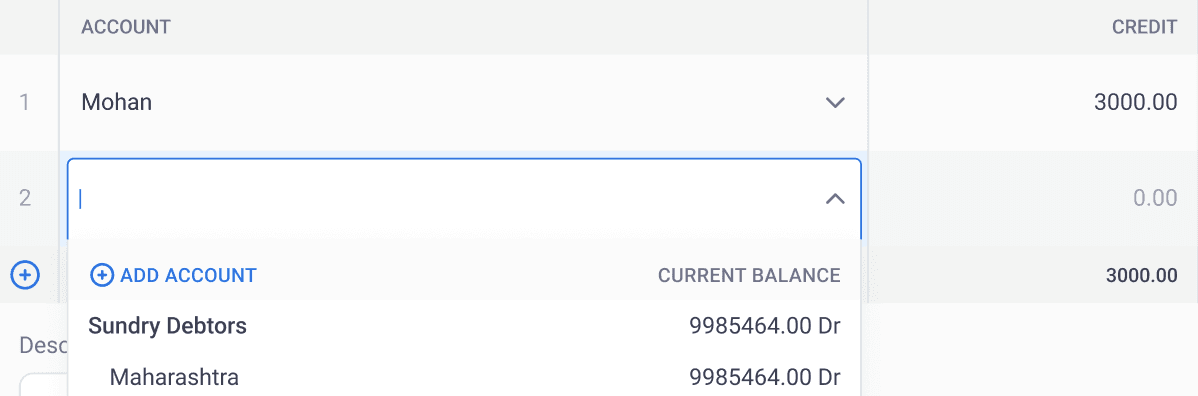
Progressive disclosure applied to both COA and JE
Sub-account fields in COA only appeared when the user was creating a sub-account. Secondary JE fields stayed hidden until needed. Focused the default path on what CAs needed most of the time, lighter without reducing capability.
The balance held throughout
Familiar enough to trust. Simpler enough to prefer.
When professionals have built habits around a workflow for years, those habits aren't friction to remove,
they're mental models to respect. Improving usability without disrupting
the mental model was the real design constraint throughout.
Kept familiar
Workflow structure
Overall step order, accounting mental model, basic COA and JE structure CAs already expected. No surprises in the fundamental sequence.
Simplified
Field density and navigation
Tradeoff accepted
Launch before full polish
1 year development: new accounting logic, existing code constraints, high QA complexity for financial workflows. Not every refinement shipped at launch.
CA testing shaped the workflow — not just the surface
CAs consistently flagged: too many fields visible when rarely needed, too much scrolling, account creation takes too many steps. Those three inputs directly produced the final design. Testing changed the workflow logic, not just the visual layer.
Impact
The most significant outcome was directional, not metric-based.
Vyapar onboarded a meaningful number of CAs, and COA/JE made the product more credible in accountant-led demos,
appreciated by the sales team and founder.
The larger outcome: this work helped the company build confidence in the CA product path,
which eventually led to acquiring Suvit (now TaxOne by Vyapar), which serves 10,000+ firms and 30,000+ accountants.
COA and JE didn't cause that alone — but they were the first credible step.
I later designed the TaxOne logo and led the website revamp.